
That 3 AM Shadow Demon is Actually Just Your Exhausted Brain: The Science of Sleep Paralysis
By Dr. Parag Sharma
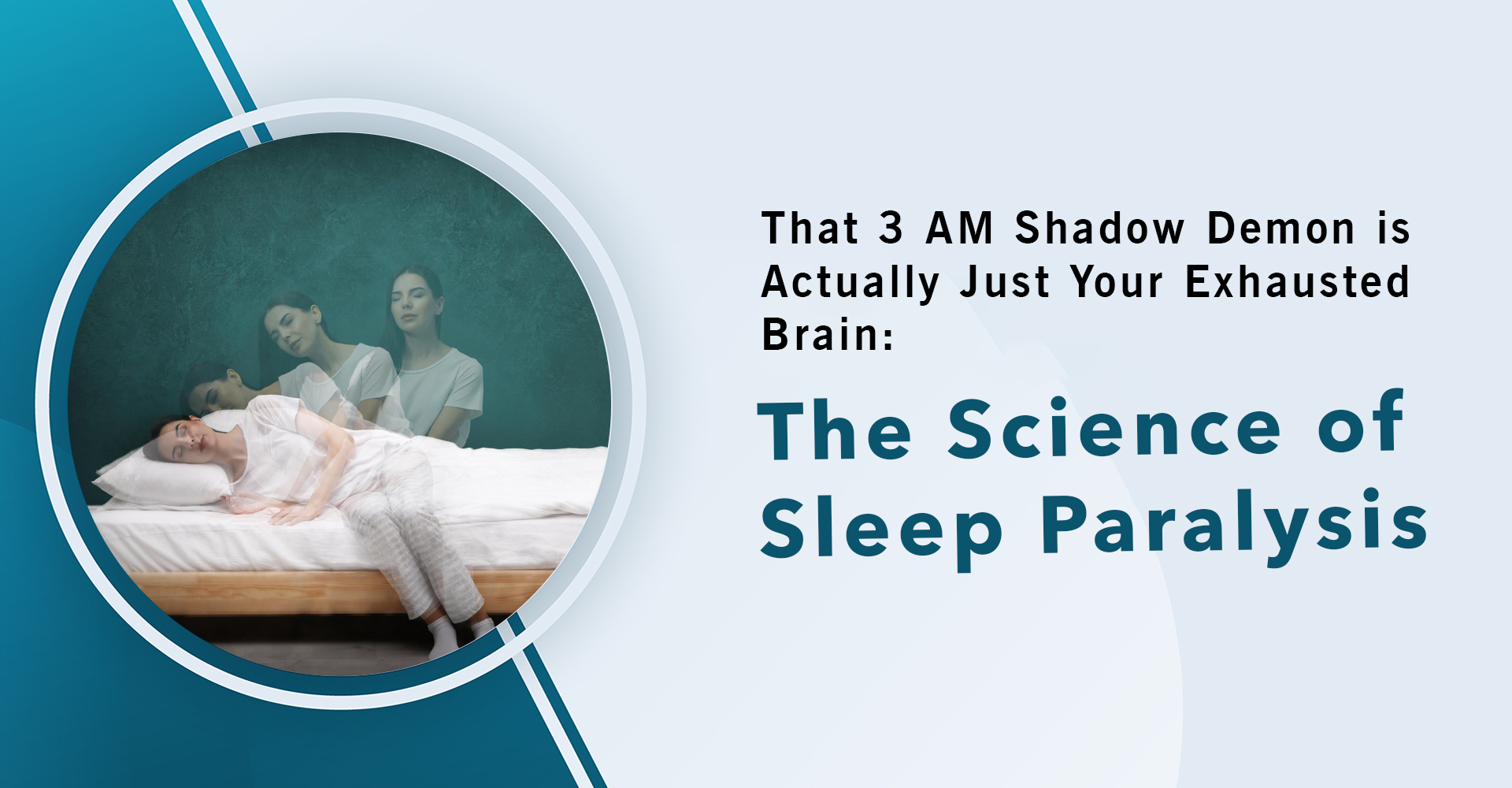
Picture this: It’s 3:30 AM. You suddenly wake up. You try to turn over, but your body refuses to move. You try to scream, but your voice is gone. Your chest feels like someone is sitting on it, and out of the corner of your eye, you swear there is a dark, shadowy figure standing in your hostel room.
For generations in India, this terrifying experience was explained away as the supernatural: the evil eye (nazar), a ghost (bhoot), or a chudail sitting on your chest.
Today, a massive chunk of Indian students and young adults are experiencing this. And while it feels like a horror movie, I promise you, you are not possessed, and your dorm room isn’t haunted. You are experiencing Sleep Paralysis.
Let’s decode what is actually happening in your brain, why our generation is experiencing it so much more, and why your “sleep demon” is actually just a symptom of severe burnout.
The Science: A Biological "Software Glitch"
To understand sleep paralysis, you don’t need a priest; you need a basic understanding of your brain’s sleep cycles.
When you fall into deep sleep—specifically the REM (Rapid Eye Movement) stage—your brain does something incredible. Because this is the stage where you have vivid, crazy dreams, your brain essentially sends a chemical signal down your spine to paralyze your voluntary muscles. This safety feature (called REM atonia) stops you from physically acting out your dreams and jumping out of your window.
Sleep paralysis is simply a synchronization error. It’s a lag in your brain’s software.
- Your mind wakes up. You become completely conscious of your room.
- But your brainstem hasn’t flipped the “paralysis switch” back off yet.
You are awake, but your body is still chemically locked down in sleep mode.
So, why the hallucinations?
Because your brain is caught halfway between the dream world and reality, your dreams literally bleed into your waking vision. Your brain panics because it can’t move, goes into “fight or flight” mode, and hallucinates your worst fears—often a dark intruder or a feeling of suffocation (because your breathing muscles are still in shallow, automatic sleep-mode).
Why is it happening to Indian Students Right Now?
Global studies show that while only about 8% of the general population gets sleep paralysis, nearly 30% to 35% of students experience it.
Why is our generation getting hit so hard? It’s not because the paranormal is trending. It’s because our modern lifestyle is fundamentally breaking our biological clocks.
1. The Academic Pressure Cooker (Hustle Culture)
Sleep paralysis thrives on a fragmented, broken sleep schedule. The Indian education system—whether you are grinding for JEE, NEET, UPSC, or trying to survive college submissions—treats sleep as a luxury, or worse, a sign of weakness. Pulling all-nighters, consuming massive amounts of caffeine, and sleeping at random hours absolutely destroys your circadian rhythm. When you are sleep-deprived, your brain tries to aggressively jump straight into REM sleep, making these “software glitches” much more likely to happen.
2. Revenge Bedtime Procrastination & Doomscrolling
You spend your entire day studying, attending lectures, and dealing with parental expectations. By 11 PM, you feel like you haven’t had a single second to yourself. So, you refuse to sleep. You stay up until 3 AM doomscrolling Instagram, Reddit, or watching YouTube. This blasted blue light from your screen destroys your melatonin (the sleep hormone). Your brain doesn’t know if it’s day or night, blurring the boundaries between being awake and asleep.
3. The Mental Health Epidemic
We are arguably the most anxious generation in history. We are constantly stressed about the job market, climate change, and our social media image. When you go to bed with skyrocketing anxiety, your brain is flooded with cortisol. It goes to sleep in a state of “hyper-vigilance.” This means your brain is already on edge, making it much easier to wake up mid-dream and trigger an episode.
4. We Stopped Calling the “Baba”
Part of the reason sleep paralysis seems to be “increasing” is actually a good thing: we are finally talking about it. In the past, young people hid these experiences because they were terrified they were going crazy or being haunted. Today, thanks to mental health awareness, “woke” students are realizing this is a medical issue, not a mystical one. The stigma is breaking, so the clinical reporting is going up.
Here is a comprehensive, clinically grounded section detailing the precise causes and treatment protocols for sleep paralysis, written to seamlessly integrate into the blog post:
The Anatomy of a Glitch: What Actually Causes Sleep Paralysis?
While we know how sleep paralysis happens (the overlap of waking consciousness and REM atonia), we must look at why the brain’s software crashes in the first place. Clinically, sleep paralysis is rarely a standalone disease; it is usually a symptom of an underlying disruption in your sleep architecture.
Here are the primary biological and environmental triggers:
- REM Rebound (The Sleep Deprivation Crash): This is the leading cause among students and corporate workers. When you routinely deprive yourself of sleep, your brain becomes starved of REM sleep. The next time you finally crash, your brain tries to make up for lost time by plunging into REM sleep too quickly and intensely—a phenomenon called “REM Rebound.” This aggressive shift destabilizes the sleep cycle, making you highly vulnerable to waking up while your body is still paralyzed.
- The Supine Trigger (Sleeping on Your Back): Sleep medicine studies reveal a fascinating physiological quirk: over 50% of sleep paralysis episodes occur when the person is sleeping flat on their back (the supine position). This position makes you more prone to airway collapse and micro-awakenings, acting as a physical trigger for the parasomnia.
- Hyper-Arousal (Anxiety and Trauma): Patients with high baseline anxiety, PTSD, or panic disorders have nervous systems that remain in a state of “hyper-vigilance,” even during sleep. The brain is constantly scanning for threats, which drastically increases the chances of waking up abruptly in the middle of a dream cycle.
- Co-occurring Sleep Disorders: In some cases, recurrent sleep paralysis is a secondary symptom of deeper clinical sleep disorders, specifically Narcolepsy (a neurological inability to regulate sleep-wake cycles) or Obstructive Sleep Apnea (where breathing stops repeatedly during the night, causing sudden awakenings).
The Clinical Protocol: How We Treat Sleep Paralysis
Because sleep paralysis is not a psychiatric delusion, we do not treat it with antipsychotics. We treat it by repairing the brain’s sleep architecture and downregulating the nervous system. Treatment is divided into two phases: what to do during an episode, and how to prevent them long-term.
Phase 1: In the Moment (Breaking the Circuit)
When you find yourself trapped in an episode, your immediate goal is to override the amygdala’s panic response and send a manual “wake up” signal to the brainstem.
- Cognitive Grounding: The moment it happens, actively remind yourself: “This is a biological glitch. I am experiencing REM atonia. I am safe.” Shifting from emotional panic to logical assessment reduces the intensity of the hallucinations.
- Micro-Movements: Do not try to thrash your arms or sit up; the large voluntary muscles are chemically locked. Instead, focus 100% of your energy on moving an extremity controlled by a smaller nerve pathway. Try to wiggle your big toe, clench your fist, or rapidly blink your eyes. Once a single voluntary muscle successfully moves, the paralysis circuit breaks, and the whole body wakes up.
- Regulated Breathing: Your breathing might feel restricted, but your diaphragm is still working automatically. Focus on taking slow, deep, intentional breaths. This activates the vagus nerve and prevents a full-blown panic attack.
Phase 2: Preventative Treatment (Repairing the Hardware)
If episodes are frequent and disrupting your quality of life, clinical intervention focuses on stabilizing the sleep cycle:
- Sleep Hygiene Engineering: The most effective cure is brutal consistency. You must anchor your circadian rhythm by waking up and going to sleep at the exact same time every day, even on weekends.
- Positional Therapy: Simply training yourself to sleep on your side rather than your back can drastically reduce the frequency of episodes. Using body pillows can physically prevent you from rolling onto your back during the night.
- Cognitive Behavioral Therapy for Insomnia (CBT-I): For patients whose sleep paralysis is driven by severe anxiety around bedtime (somniphobia), CBT-I is the gold standard. It helps dismantle the catastrophic thoughts associated with sleep and rebuilds a healthy association with the bed.
- Pharmacological Support: In severe, chronic cases where behavioral changes are not enough, a psychiatrist may prescribe specific medications. SSRIs (Selective Serotonin Reuptake Inhibitors) or TCAs (Tricyclic Antidepressants) are highly effective because they clinically suppress and reduce the amount of REM sleep you get, thereby directly eliminating the window in which sleep paralysis can occur.
How to Beat the Sleep Demon
If you find yourself trapped in an episode tonight, here is your clinical escape plan:
- Don’t Fight It: The more you panic and try to thrash around, the heavier the weight on your chest will feel. Your brain feeds on the panic.
- Remind Yourself of the Science: Mentally repeat to yourself: “I am awake, my body is just asleep. This is a chemical glitch. I am safe.”
- Wiggle a Toe: Don’t try to sit up. Focus all your energy on moving one tiny muscle—like wiggling your big toe, your pinky finger, or scrunching your face. Once one voluntary muscle breaks the paralysis, the whole system usually snaps out of it, and you will wake up fully.
The ultimate cure? Stop romanticizing toxic hustle culture. Your brain is not a machine you can hack with endless red bulls and 4 hours of sleep. Set a strict bedtime, put the phone in another room, and give your nervous system the rest it is desperately begging for.