
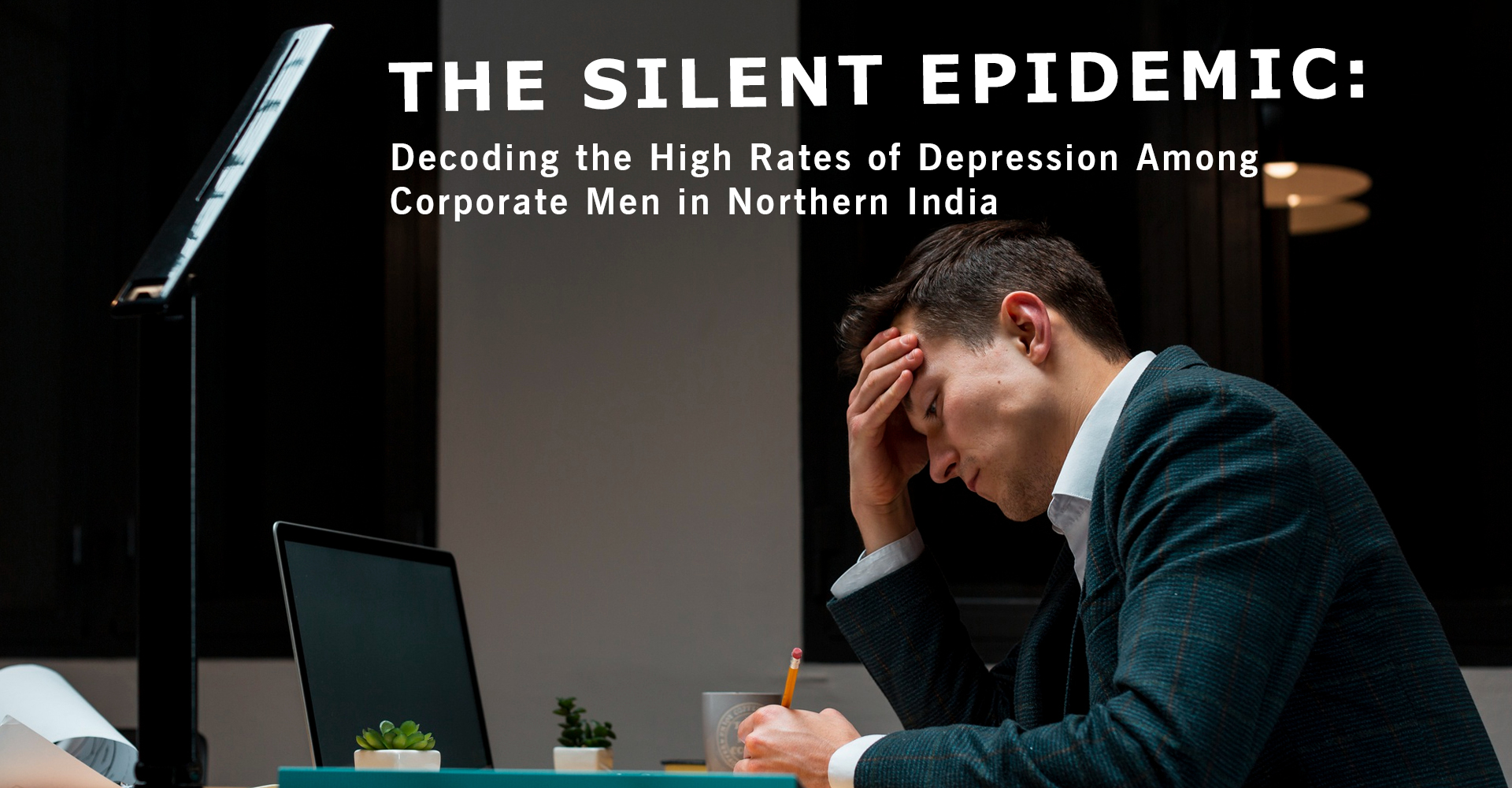
The Silent Epidemic: Decoding the High Rates of Depression Among Corporate Men in Northern India
By Dr. Parag Sharma
If you look at the LinkedIn feeds of men working in the corporate hubs of Delhi NCR, Gurugram, or Chandigarh, you see a curated highlight reel of success: promotions, luxury cars, and aggressive networking. But in the privacy of my psychiatric clinic in Mohali, a very different, deeply concerning reality unfolds.
We are witnessing an unprecedented spike in clinical depression and severe anxiety among urban, educated Indian men in their 30s and 40s.
Traditionally, society has taught men to be the stoic providers, masking their distress behind the phrase, “I am just stressed about work.” But “stress” is no longer an adequate word. What these men are experiencing is a systemic psychological and biological collapse, driven by a unique, highly toxic cocktail of modern corporate demands, shifting domestic dynamics, and a rapidly degrading environment.
To understand why so many men are silently drowning, we must examine the complete ecosystem they inhabit in Northern India.
1. The Economic Pressure Cooker
The definition of a “successful” man in Northern India carries immense financial weight.
- The Unrelenting Cost of Living: The baseline for a middle-class life in cities like Delhi or Chandigarh has skyrocketed. Men are trapped in a cycle of high-interest EMIs for apartments, luxury vehicles required for social status, and exorbitant school fees. The psychological dread of losing a job is not just about career progression; it is about the immediate collapse of a heavily leveraged lifestyle.
- The Toxic Hustle: The modern corporate culture demands 24/7 availability. The boundaries between work and home have evaporated, leading to chronic over-activation of the body’s stress response (the HPA axis). This continuous flood of cortisol physically damages the brain’s ability to regulate mood.
2. The Domestic Crossfire: The Burden of “Kalesh”
A home is biologically supposed to be a sanctuary where the nervous system can finally relax. For many men in joint or semi-joint families, it is exactly the opposite.
- Intergenerational Conflict: The clash between traditional mothers and modern, independent wives—colloquially referred to as household kalesh—places the man in an impossible, unwinnable position. Forced to act as a perpetual mediator, he is guaranteed to disappoint someone he loves daily.
- The Loss of a Safe Space: When a man leaves a high-stress boardroom only to enter a tense, combative home environment, his brain never receives the signal that he is “safe.” This chronic state of hyper-vigilance rapidly depletes serotonin and dopamine, accelerating the onset of clinical depression.
3. Destructive Escapism: Liquor Culture and Infidelity
When the pressure becomes unbearable and men lack the vocabulary or safe spaces to discuss their mental health, they turn to socially conditioned escapes.
- The Northern Liquor Culture: In Northern India, heavy drinking is aggressively normalized as a way for men to “unwind” or bond. However, alcohol is a central nervous system depressant. While it provides a temporary numbing effect, the subsequent chemical withdrawal creates a severe rebound anxiety, trapping the man in a cycle of self-medication that physically worsens his depressive disorder.
- Infidelity as a Stress Response: While often viewed purely as a moral failing, in psychiatric terms, infidelity in highly stressed men is frequently an extreme, destructive search for a dopamine hit. It is an unconscious attempt to feel alive, desired, and momentarily detached from the crushing burdens of EMIs and domestic conflict. Ultimately, the resulting guilt and marital devastation only deepen the depressive spiral.
4. The Biological Saboteurs: Pollution and Poor Nutrition
We cannot separate the mind from the physical environment, and the environment in Northern India is currently hostile to mental health.
- The Smog and Neuroinflammation: Cities in the NCR region consistently rank among the most polluted in the world. Emerging psychiatric research shows a direct link between high levels of PM2.5 particulate matter and neuroinflammation (inflammation in the brain). This biological inflammation alters brain chemistry and is an independent, driving factor for depression and cognitive decline.
The Corporate Diet: Relying on late-night food delivery apps means a diet excessively high in refined seed oils, simple carbohydrates, and sugar, while severely deficient in protein and Omega-3s. This creates extreme insulin spikes and crashes, disrupting gut health. Since over 90% of the body’s serotonin (the “happy chemical”) is produced in the gut, this poor nutrition directly starves the brain of the chemicals it needs to feel joy.
Moving Forward: Breaking the Silence
The greatest tragedy of this epidemic is the silence surrounding it. Men are suffering heart attacks in their early 40s and experiencing complete emotional burnouts because acknowledging depression is still viewed as a weakness in a patriarchal society.
It is time to redefine strength. Strength is not swallowing your pain until your biology breaks down. Strength is recognizing that the ecosystem you are living in is toxic and taking proactive, medical steps to protect your mind and body.
Recovery requires an integrative approach: setting brutal boundaries at work, navigating difficult domestic conversations with professional therapeutic help, cleaning up the diet to reduce inflammation, and utilizing medical interventions when brain chemistry needs stabilization.
If you recognize yourself in this cycle, do not wait for a total collapse. Your family needs a healthy, present father and husband far more than they need a perfect provider.
Here is a comprehensive section on treatment options, written in the same clinical yet empathetic voice, designed to be inserted seamlessly into the blog post before the final “Moving Forward” conclusion:
The Blueprint for Recovery: Integrative Treatment Options
When a man’s nervous system is fundamentally burned out by corporate stress, environmental toxicity, and domestic conflict, simply telling him to “take a vacation” or “relax” is medically negligent. Severe depression is a biological and psychological injury that requires a structured, multi-disciplinary treatment plan.
In our practice, we utilize an integrative approach tailored specifically for the modern Indian man, focusing on removing the stigma and delivering tangible results.
1. Pharmacotherapy: Stabilizing the Biology
We must dismantle the stigma that taking psychiatric medication is a sign of mental weakness. When chronic stress (high cortisol) and pollution-induced neuroinflammation have physically altered the brain’s structure, willpower is not enough.
- Targeted Antidepressants (SSRIs/SNRIs): These medications act as a crucial biological bridge. They do not change your personality; they repair the depleted serotonin and dopamine pathways, stopping the emotional free-fall and restoring the energy required to actually engage in therapy.
- Metabolic Correction: We mandate full blood panels to correct deficiencies epidemic in corporate men—specifically severe Vitamin D3, B12, and Magnesium shortages—which mimic and exacerbate clinical depression.
2. Cognitive Behavioral Therapy (CBT): The “Executive Coaching” for the Mind
Many corporate men resist traditional talk therapy because they feel it is unproductive to simply “complain” about their feelings. We approach therapy differently.
- Structural Problem Solving: CBT is highly practical. It helps men identify the catastrophic thinking patterns associated with financial anxiety (EMIs, job security) and teaches them how to compartmentalize stress so it does not hijack their entire nervous system.
- Navigating Domestic Conflict: Therapy provides the necessary tools for boundary setting. We teach men how to constructively navigate household kalesh without resorting to passive-aggressive silence, explosive anger, or escapism. Where appropriate, couples counseling is utilized to dismantle the “mediator” trap and foster direct, healthy communication between family members.
3. Nutritional Psychiatry and Environmental Defense
You cannot heal a brain in the same toxic environment that made it sick. We must actively counter the effects of the NCR lifestyle.
- Anti-Inflammatory Protocols: Transitioning away from late-night, seed-oil-heavy food deliveries to an anti-inflammatory diet rich in Omega-3 fatty acids (crucial for brain health) and high-quality proteins.
- Supplementation for Smog: Utilizing specific antioxidants (like NAC – N-Acetyl Cysteine) which have shown clinical efficacy in protecting the brain from the neuroinflammatory effects of heavy particulate air pollution.
4. Behavioral Reset: Dismantling Toxic Coping Mechanisms
We cannot treat depression while the brain is caught in a cycle of chemical withdrawal from alcohol.
- Supervised Harm Reduction: We work with patients to systematically break their reliance on the regional liquor culture as a primary stress-relief tool.
- Somatic Regulation: Replacing alcohol with evidence-based physical interventions that actually discharge stress from the body, such as heavy resistance training, structured cardiovascular exercise, or targeted breathwork protocols designed to activate the parasympathetic (rest and digest) nervous system.