
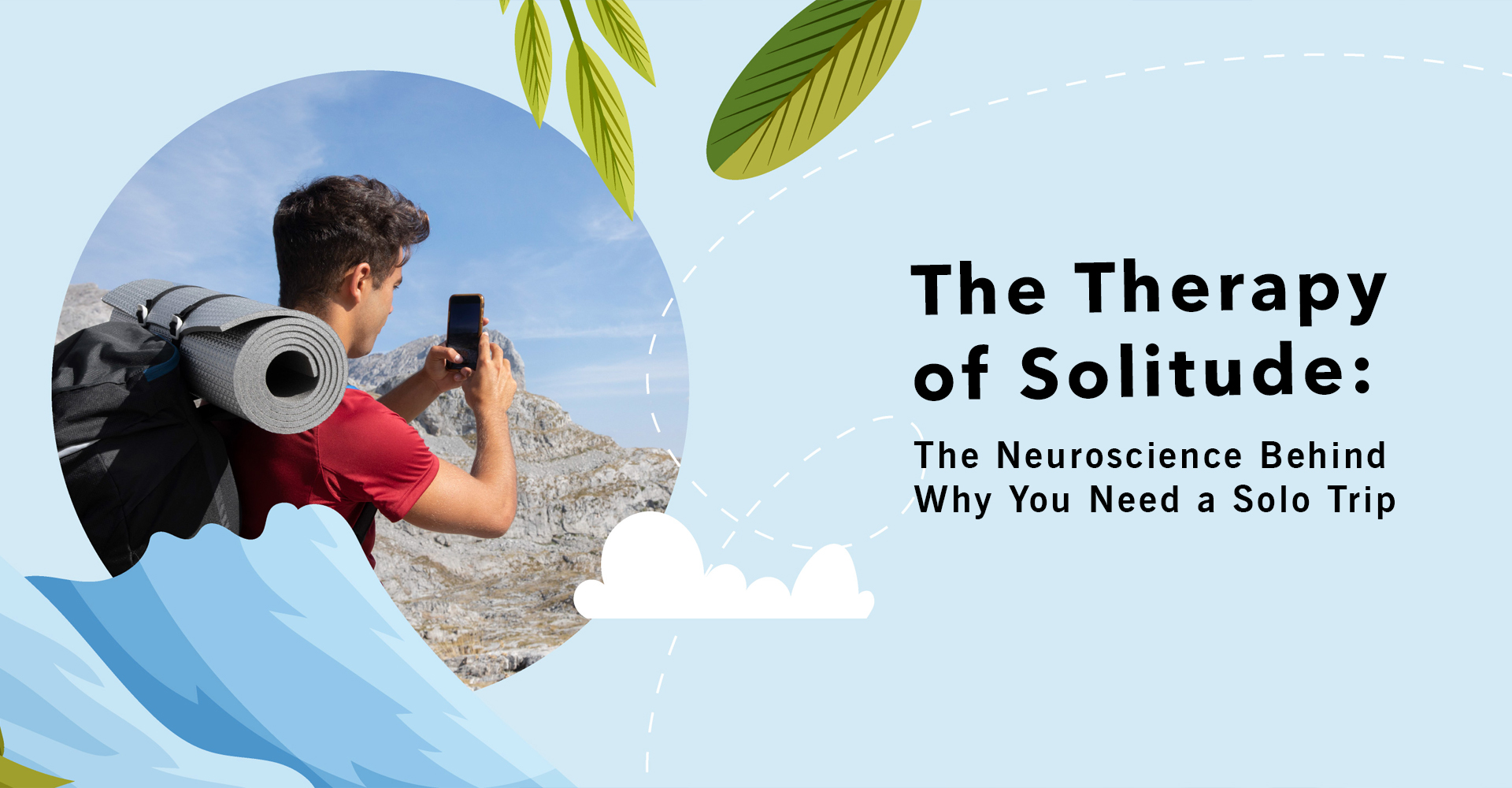
The Therapy of Solitude: The Neuroscience Behind Why You Need a Solo Trip
By Dr. Parag Sharma
In the Indian cultural context, we are deeply conditioned to exist in collectives. We travel with our families, we vacation with our college friends, and we plan corporate offsites with our colleagues. The idea of packing a bag and traveling completely alone is often met with confusion or concern by our loved ones: “Are you depressed? Did you fight with someone? Is it safe?”
However, in my psychiatric practice, I prescribe intentional solitude more often than you might think.
We are living in an era of profound chronic stress, characterized by relentless digital connectivity and deep “role fatigue.” For the modern urban professional, taking a solo trip is not a symptom of loneliness or a selfish indulgence; it is a profound, evidence-based intervention for mental health.
Let us look past the Instagram aesthetics of solo travel and dive into the clinical insights and neuroscience of why leaving everyone behind might be the healthiest thing you can do for your brain.
The Clinical Insight: Who Actually Travels Alone?
There is a persistent stigma that solo travelers are antisocial, lonely, or running away from their problems. Clinical psychology paints a very different picture.
People who intentionally seek solo travel are often those experiencing severe Role Fatigue. In your daily life in a city like Delhi or Chandigarh, you are rarely just you. You are a manager, a spouse, a parent, a son, or a daughter. Every hour of your day is dictated by the expectations, compromises, and emotional needs of these roles.
Solo travelers are not running away from people; they are stepping away from their roles to rediscover their baseline identity. It is a psychological reset button. When you remove the external expectations, you are forced to answer a fundamental question that many adults forget how to ask: “What do I actually want to do today?”
The Neuroscience of Solo Travel
When you travel alone, you are fundamentally altering your brain chemistry and architecture. Here is the science behind the healing:
1. Disrupting the “Default Mode Network” (DMN)
The Default Mode Network is a network of interacting brain regions that is active when you are not focused on the outside world—it is the center for daydreaming, reflecting on the past, and worrying about the future. In people with chronic anxiety or depression, the DMN becomes overactive, leading to a toxic loop of rumination.
- The Solo Travel Effect: When you are navigating a new city alone—figuring out a foreign transit system or reading a map—your brain is forced out of the DMN and into the Task-Positive Network. You must be fiercely present to survive and navigate. This intense presence breaks the cycle of anxious rumination, offering immediate, profound relief to an overworked nervous system.
2. Neuroplasticity and Cognitive Flexibility
Your brain is incredibly efficient; it builds strong neural pathways for your daily routines to save energy. However, this routine can lead to cognitive stagnation, which heavily mimics depressive lethargy.
- The Solo Travel Effect: Throwing yourself into a novel, unpredictable environment completely alone forces your brain to build new neural connections (neuroplasticity). Navigating language barriers, trying unfamiliar foods, and solving unexpected travel hiccups without a safety net of friends forces the brain to release a cocktail of growth factors (like BDNF). You return sharper, more adaptable, and cognitively rejuvenated.
3. The Dopamine of Self-Efficacy
In our daily lives, our decisions are diluted by compromise: deciding where to eat based on what the kids want, or choosing a movie based on a partner’s preference.
- The Solo Travel Effect: Solo travel is the ultimate exercise in self-efficacy (the belief in your own ability to execute tasks and achieve goals). When you successfully plan a route, navigate a challenge, or simply enjoy a meal alone at a cafe, your brain rewards you with a massive hit of dopamine. You are reminding your brain that you are a capable, autonomous, and resilient individual. This deeply repairs fractured self-esteem.
4. Cortisol Reduction and True Rest
When you travel with others, even people you love deeply, your brain is still engaged in subtle social calculations: Is everyone having fun? Is my partner tired? Are the kids hungry? You are still “on.”
The Solo Travel Effect: True psychological rest occurs only when you are untethered from the emotional regulation of others. Without the need to compromise or perform, your sympathetic nervous system can finally disengage, leading to a significant, sustained drop in cortisol (the stress hormone) levels.
The Prescription: How to Do It Right
If the thought of a two-week solo trek through Europe is terrifying, you do not have to start there. Intentional solitude is a muscle that must be built.
- Start Micro: Begin with a “solo date.” Go to a restaurant, order a meal, and eat it without staring at your phone. Simply sit with your own thoughts.
- The Weekend Reset: Book a quiet homestay a few hours away (like in the Kasauli hills or a quiet spot in Rajasthan) for just two nights. The goal is not a packed itinerary; the goal is zero compromise.
- Embrace the Discomfort: The first 24 hours of a solo trip often induce panic or intense boredom. This is simply your brain experiencing withdrawal from constant social and digital stimulation. Push through that initial discomfort. On the other side of it lies profound mental clarity.
Moving Forward
We must stop viewing solitude as a punishment or a symptom of loneliness. In a world that constantly demands your attention, your energy, and your compromise, choosing to spend time exclusively with yourself is a radical act of self-care.
A solo trip does not magically erase the complexities of your life, your EMIs, or your corporate stressors. But it does rebuild the psychological armor required to handle them. Sometimes, you have to disconnect from the world to finally reconnect with yourself.