
By Dr. Parag Sharma
5 Signs of Depression in Teenagers Every Parent Should Know
Teenage (13-19 years) is full of emotional, physical and social changes. Mood swings, irritability, peer pressure and wanting more privacy is normal part of growing up. Sometimes these changes are persistent, intense or extreme and begin affecting teenager’s school, relationships, sleep or everyday life. This could be sign of something more serious like Depression. “Depression in teenagers is a real mental health condition and should not simply be dismissed as “teenage moodiness.”
The World Health Organization notes that depression is different from ordinary short-term mood changes. A Major Depressive Episode involves symptoms such as persistent low mood, loss of interest, occurring for most of the day and nearly every day for at least two weeks, along with other emotional, cognitive or physical symptoms. Effective treatments are available.
For parents and caregivers, a Certified Psychiatrist recognizes the warning signs early and make it easier to start a supportive conversation.
What is depression in teenagers?
Depression is a mental health condition that can affect children, adolescents as well as adults. During adolescence, depression may appear through emotional changes, but it can also show up as mood swings, intense fear or anger, social withdrawal, changes in sleep or appetite, difficulty concentrating, falling academic performance or loss of interest in activities.
The WHO defines adolescence as the period from ages 10 to 19. It is a major stage of physical, cognitive and psychosocial development, making it particularly important to pay attention to significant and persistent changes in behaviour or functioning.
Not every teenager who becomes quiet, irritable or tired has depression. The important question is whether the changes are persistent, significant and interfering with everyday life.
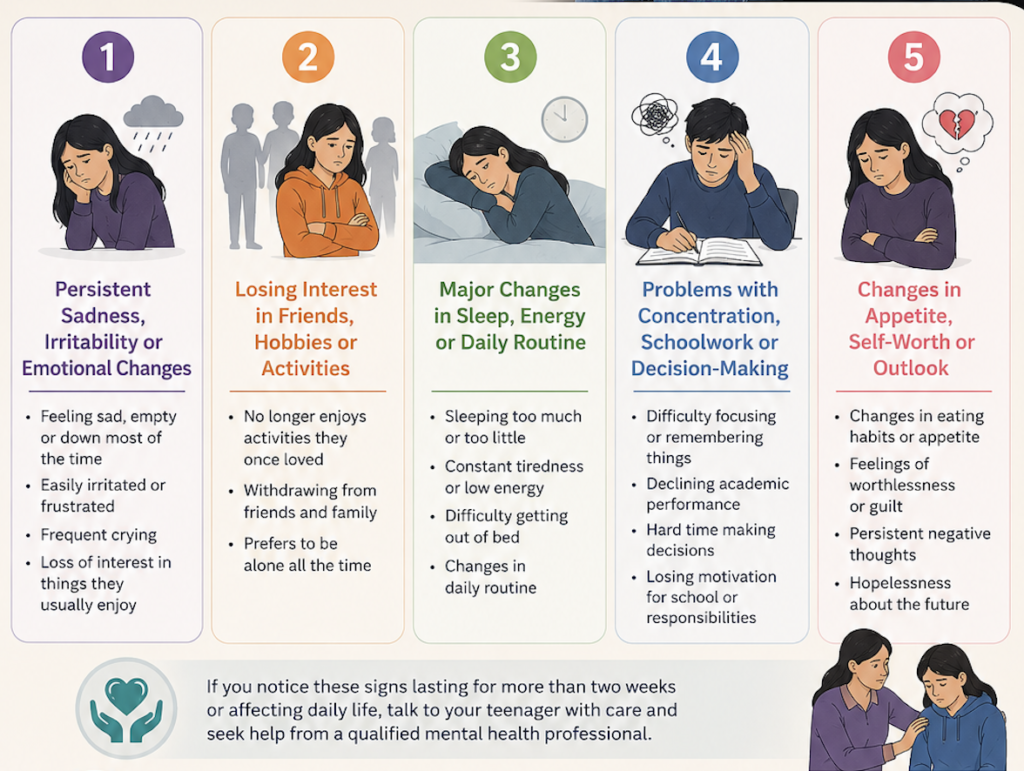
5 signs of depression in teenagers
1. Persistent sadness, irritability or frequent emotional changes
One of the most noticeable signs of depression in teenagers can be a significant change in mood.
A teenager may:
- Seem sad, empty or unusually low for prolonged periods
- Become persistently irritable or easily frustrated
- Cry more frequently
- Appear emotionally overwhelmed
- Lose their usual enthusiasm
- Seem unusually negative or hopeless about the future
Depression in adolescents does not always look like obvious sadness. Some teenagers may primarily appear angry, irritable or emotionally distant.
Parents should “Look beyond behaviour. Understand what your child is trying to tell you.”
I ask parents to pay attention when a noticeable change in mood continues for weeks rather than improving after a short period.
2. Losing interest in friends, hobbies or activities
A teenager who previously enjoyed sports, music, gaming, hobbies, school activities or spending time with friends may gradually stop participating.
They may say:
- “I don’t feel like going. outside”
- “I don’t care anymore.”
- “It’s boring to live.”
- “I just want to be alone.”
A loss of interest or pleasure in activities that were previously enjoyable is an important symptom associated with depression. In my Psychiatry Clinic, “Every child communicates differently; experienced care helps parents understand the difference between growing pains and signs that deserve professional attention.”
Some degree of wanting privacy is normal during adolescence. However, a sudden and sustained withdrawal from activities and relationships that previously mattered to the teenager deserves attention.
3. Major changes in sleep, energy or daily routine
Depression can affect a teenager’s physical routine as well as their emotional state.
Parents may notice:
- Sleeping much more or much less than usual
- Difficulty getting out of bed
- Persistent tiredness
- Low energy
- Reduced participation in normal activities
- A noticeable change in daily routine
Sleep problems can sometimes be mistaken for laziness or simply staying up late. But when sleep changes occur together with low mood, withdrawal, poor concentration or loss of interest, they may be part of a broader mental health problem.
The WHO lists disturbed sleep, tiredness and low energy among cardinal symptoms that may occur with depression.
4. Problems with concentration, schoolwork or decision-making
Another possible sign of depression in teenagers is a noticeable change in concentration and functioning.
You may observe:
- Difficulty focusing on homework
- Routine Forgetfulness
- Declining academic performance
- Taking much longer to complete ordinary tasks
- Difficulty making simple decisions
- Losing motivation to attend school or participate in activities
A teenager who was previously performing normally may suddenly struggle to concentrate or keep up with everyday responsibilities.
This does not automatically mean depression. Academic difficulties can have many causes, including learning difficulties, anxiety, sleep problems, family stress and other health conditions. A professional assessment by a Psychiatrist can help identify the underlying cause.
5. Changes in appetite, self-worth or the way they see themselves
Depression can also affect how teenagers think and feel about themselves.
Some may experience:
- Changes in appetite
- Noticeable changes in eating patterns
- Feelings of worthlessness, hopelessness and helplessness
- Excessive guilt or disappointment
- Persistent self-criticism
- Negative beliefs about their future
The WHO identifies changes in appetite, low self-worth, excessive guilt and hopelessness among symptoms associated with depression.
“Early understanding can make a lasting difference”.
Parents should take persistent negative changes in self-esteem seriously, particularly when they occur alongside other symptoms.
How can parents tell the difference between normal teenage behaviour and depression?
In my Psychiatry OPD at Mohali, this is one of the most difficult questions for parents.
Teenagers naturally experience changes in emotions, friendships, interests, sleep patterns and independence. A single bad day, argument, poor examination result or period of wanting privacy does not necessarily indicate depression.
Look instead for a pattern of change.
Consider:
- Has the change lasted for two weeks or longer?
- Is it happening most days?
- Is your teenager no longer enjoying things they previously liked?
- Is school performance or attendance changing?
- Have friendships or family relationships changed significantly?
- Are sleep, appetite or energy noticeably different?
- Does your teenager seem persistently hopeless, worthless or unusually withdrawn?
- Is everyday functioning becoming more difficult?
- Do you feel disconnected with your son/daughter?
When several changes occur together and interfere with daily life, it is worth discussing them with a qualified mental health professional.
What should parents do if they notice these signs?
The first step is not to panic or immediately assume that your teenager has depression.
Instead, create a calm opportunity to talk. Before you start to talk, keep water and tissues ready as it might be the first venting out session for them! and Yes avoid phone and other disctractions.
Try saying:
“I’ve noticed you’ve seemed different lately, and I want to know more. You don’t have to handle everything alone. I’m here to listen.”
Give your teenager time to respond and it can take few minutes before they start to speak. Avoid immediately criticizing, lecturing or trying to solve everything. Just listen, understand, and be present.
Tips for a healthy discussion with a teenager:
- Listen without judgment
- Ask open-ended questions
- Take their concerns seriously
- Maintain a supportive routine
- Encourage healthy sleep and daily activities
- Speak with a pediatrician, psychiatrist or qualified mental health professional when concerns persist
A Psychiatric evaluation can determine whether the symptoms are related to depression or another emotional, behavioural or physical health concern.
Early identification and intervention can be important. WHO guidance emphasizes the importance of addressing emotional and behavioural symptoms in adolescents rather than allowing problems to progress without support.
When should a teenager see a psychiatrist?
Consider seeking professional help when symptoms are persistent, worsening or interfering with school, relationships, sleep, appetite or everyday functioning.
A psychiatrist, like Dr Parag Sharma MD can assess the teenager’s symptoms, medical and psychological history, environment and overall functioning before recommending an appropriate treatment plan.
Dr. Parag Sharma is a psychiatrist with an MBBS and MD in Psychiatry and more than 10 years of experience. Professional help does not necessarily mean medication. Depending on the individual’s symptoms and clinical assessment, treatment may involve psychological interventions, family support, lifestyle changes, medication when clinically appropriate, or a combination of approaches.
A note for parents
If your teenager is struggling emotionally, try not to interpret their behaviour as simply being “difficult,” “lazy” or “attention-seeking.”
Mental health symptoms can affect motivation, concentration, sleep, relationships and everyday functioning.
A supportive parent can make a significant difference by noticing changes, listening without judgment and helping the teenager access appropriate care.
Most importantly, depression is treatable, and seeking professional help is a sign of taking your teenager’s wellbeing seriously.
Frequently Asked Questions
What are the most common signs of depression in teenagers?
Common signs may include persistent sadness or irritability, loss of interest in activities, changes in sleep or energy, difficulty concentrating, changes in appetite, low self-worth and feelings of hopelessness. The combination, duration and impact on daily functioning are important when assessing depression.
How long do depression symptoms need to last?
A depressive episode generally involves symptoms occurring most of the day, nearly every day, for at least two weeks. However, parents should not wait for symptoms to become severe before asking for professional guidance if they are concerned about their teenager.
Is irritability a sign of depression in teenagers?
Yes. Depression in adolescents does not always present as obvious sadness. Irritability can be an important part of the emotional presentation, particularly when it is persistent and accompanied by other changes such as withdrawal, loss of interest or problems with functioning.
Can depression affect school performance?
Yes. Depression can affect concentration, motivation, energy and decision-making, which may contribute to difficulties with schoolwork or other daily responsibilities.
Should parents consult a psychiatrist for teenage depression?
If symptoms are persistent, worsening or affecting school, relationships, sleep or everyday functioning, a professional mental health assessment is appropriate. A psychiatrist can evaluate the symptoms and determine whether treatment or further assessment is needed.
Final takeaway
The 5 signs of depression in teenagers parents should watch for include:
- Persistent sadness, irritability or emotional changes
- Loss of interest in hobbies, friends or activities
- Significant changes in sleep, energy or routine
- Difficulty concentrating or declining school performance
- Changes in appetite, self-worth or outlook
One symptom alone does not establish a diagnosis. What matters is the overall pattern, persistence and impact on the teenager’s life.
If you notice meaningful changes in your teenager’s mood or behaviour, lasting atleast a week, start a conversation and seek professional guidance.
Book Your Consultation with Dr Parag Sharma Psychiatrist:
- Phone/WhatsApp: +91 6350485705
- Website : Video Consult with Dr Parag Sharma OR Consult with Dr Parag Sharma on Apollo OR Consult with Dr Parag Sharma MD on Practo
Medical disclaimer: This article is for educational purposes by Dr Parag Sharma MD Psychiatrist and is not a substitute for an individual psychiatric or medical evaluation. Depression can present differently from one teenager to another, and persistent or concerning symptoms should be assessed by a qualified healthcare professional.
